
Table of contents
Proof of delivery often goes unnoticed by customers and retailers alike. It’s only when something goes wrong that it becomes the document everyone wants.
In this guide, you’ll learn what proof of delivery is, what it should include and how to build a process that reassures customers and protects your store.
What is proof of delivery?
Proof of delivery (POD) is a document or digital record that confirms a parcel has been delivered to the intended recipient.
A proof of delivery document captures several key pieces of information:
- Delivery data and time
- The recipient’s name
- Their signature (often captured digitally)
- A GPS location of where the delivery took place
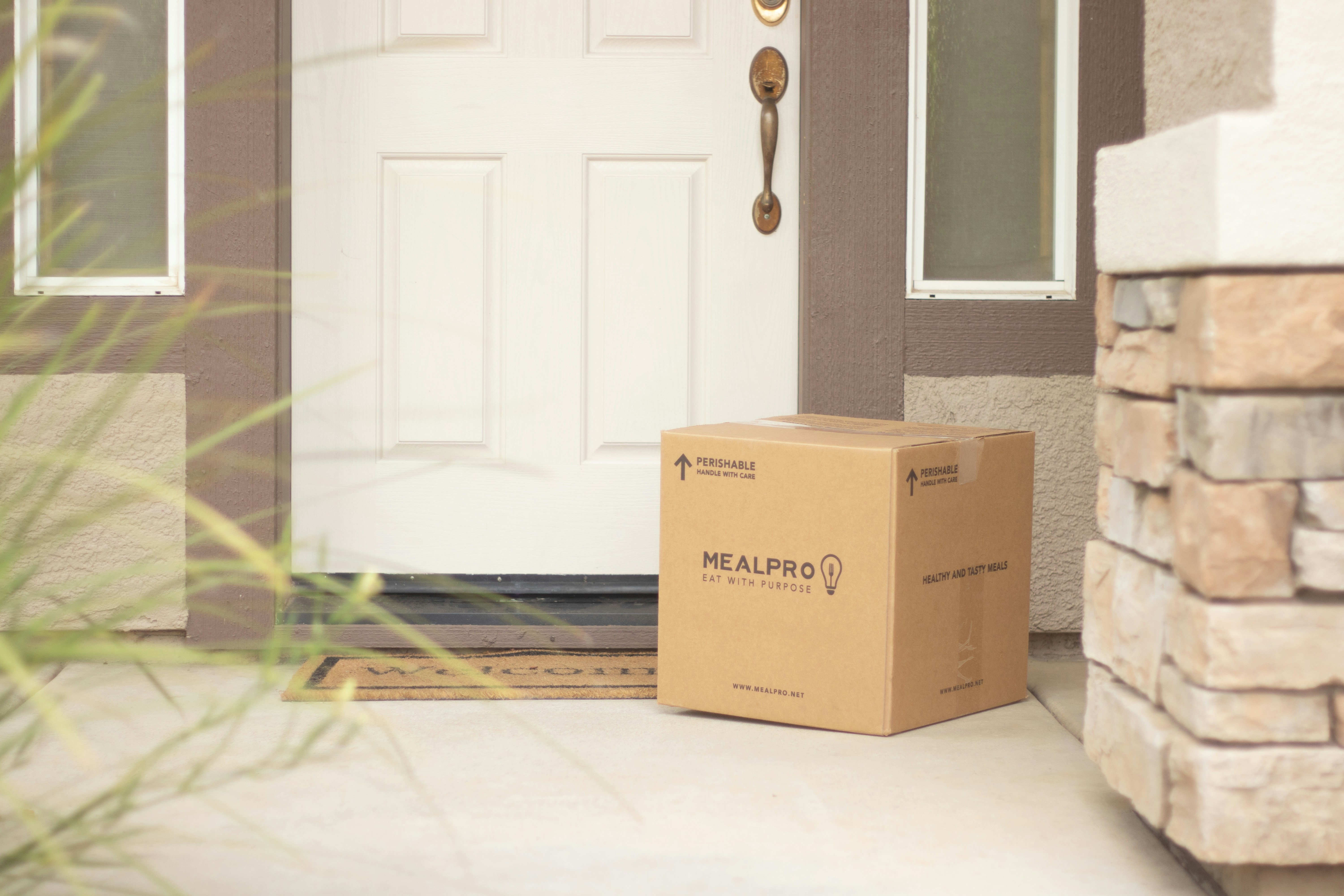
- Photo evidence of a successful delivery
- The delivery tracking number
- Parcel description
Not every carrier captures all of this information. But it’s important they capture as much detail as possible. When choosing carriers or evaluating your current setup, the depth and consistency of POD capture should be a deciding factor.
Paper POD vs electronic POD (ePOD)
Over recent years, paper waybills with handwritten signatures have largely given way to digital records.
Electronic PODs (ePODs for short) capture photos, signatures and timestamped GPS data on a courier's handheld device and are uploaded to the carrier's system in real time. The retailer and customer can usually access the POD within minutes of delivery via email or an online system.
ePODs have become the standard for almost all eCommerce deliveries due to faster access. When a customer queries a delivery, you need to resolve it the same day, not next week.
Why proof of delivery matters for retailers
Proof of delivery does more than confirm a parcel arrived. It does several other jobs at once:
- It resolves “where is my order” (WISMO) disputes. Some parcels genuinely don’t arrive. Some do arrive, but without the customer realising. Proof of delivery with photos and GPS data settles these disputes in seconds.
- It protects against fraud and chargebacks. “Item not received” chargebacks are a known fraud. A POD with photo evidence and a signature is a strong defence.
- It supports insurance claims. If something does go wrong, the insurer will want to see the POD before processing a claim.
- It builds customer trust. Sending a delivery photo to the customer the moment their parcel arrives reduces anxiety, prevents queries and improves the post-purchase experience.
Each of these jobs becomes more important for retailers that ship internationally. Cross-border disputes are often harder to investigate, and chargebacks can be more common.
That’s why you need a strong POD process, something you’ll learn how to build next.
How to create a POD process that reassures customers and protects your store
A strong POD process is built from a sequence of choices, including carrier selection, customer communication and internal operations. Here are six practical steps to building one that works for cross-border shipping.
1. Choose carriers with strong ePOD practices
Not all carriers capture POD the same way. Some take photos by default, others only do so when they leave the parcel in a safe place. The differences can be even wider between a German multinational carrier and a regional carrier in southern Italy.
Before signing a carrier contract, ask four questions:
- What fields does the carrier capture by default?
- How quickly is POD available?
- How long is it retained?
- Can your customer service team access it?
Use the answers to prioritise carriers beyond price and availability.
2. Make photo evidence the minimum, not the exception
A signature often isn’t enough to settle disputes on its own. Sometimes they’re ineligible. Other customers will claim it’s the courier’s signature, not theirs.
A photo, by contrast, is hard to dispute. If couriers can provide a timestamped image of a parcel being handed to a recipient, with a GPS confirming the address, that will be enough to settle almost any dispute. That’s why you want to make photo evidence the standard for every delivery, not just those left in safe places.
3. Share POD with customers immediately and in their language
Sending a successful delivery notification immediately reassures customers, prevents WISO emails and creates a small positive moment in the post-purchase experience.
For cross-border commerce, these benefits only occur if the communication is written in the customer’s local language and sent through their preferred channel. A delivery confirmation written in English landing on a Spanish customer's phone is a missed engagement opportunity.
4. Make POD self-service for customers and your team
Your customer service team shouldn’t be a bottleneck for accessing POD. When a customer queries a delivery, they should be able to view proof via your tracking link without speaking to your team.
The same is true for your internal team. When they need to investigate a dispute, they should be able to pull up proof from your order management system in seconds.
5. Set retention policies that match your dispute timeline
The 12-month POD retention period most carriers offer sounds generous until you realise that chargeback windows on some major credit cards can last for several years.
Map your retention requirements against average chargeback timelines, insurance claim windows and regulatory requirements for your category. For most retailers, 12 months should be the floor, not the ceiling.
4 cross-border POD challenges and how to overcome them
There are a few specific cross-border complications worth flagging. Here’s what they are and how you can overcome them.
- Signature norms vary by market. The Netherlands and parts of Scandinavia have moved heavily towards contactless delivery and safe-place drops, where signatures are rare. Italy, Spain and parts of Eastern Europe still expect them. Your POD process needs to handle both without flagging the contactless deliveries as incomplete.
- Language barriers slow dispute resolution. A POD with names, addresses and notes captured in local languages can complicate investigations if your team only reads English. Choose carriers whose POD records are translated or formatted consistently across markets.
- GDPR and privacy regulations restrict how delivery photos can be captured, stored and shared. Carriers operating in the EU usually handle this for you, but it's worth confirming. Some markets require faces or background details to be blurred automatically.
- Carrier standards are inconsistent. POD from a major German carrier can look very different from one captured by a small final-mile partner in a developing market. Build your process around the lowest-common-denominator capability of the carriers you actually use — not around your best one
How Pro Carrier supports a strong POD process
POD only matters if the parcel gets delivered in the first place. And the biggest cause of delivery failure isn't the carrier. It's the customer not knowing the delivery is coming, not being home or not being given a clear option to redirect.
Pro Carrier's cross-border eCommerce service tackles both sides of the problem.
Our carrier network captures full ePOD across every route, with photos, GPS data and timestamps available to you and your customer. Crucially, our localised post-purchase notifications keep customers informed in their own language at every stage of the journey, from dispatch confirmation through to delivery slot selection.
The result is fewer missed deliveries, fewer redelivery attempts and stronger POD evidence. Speak to one of our experts today to find out how we can help you build a POD process that protects your store and reassures your customers.