
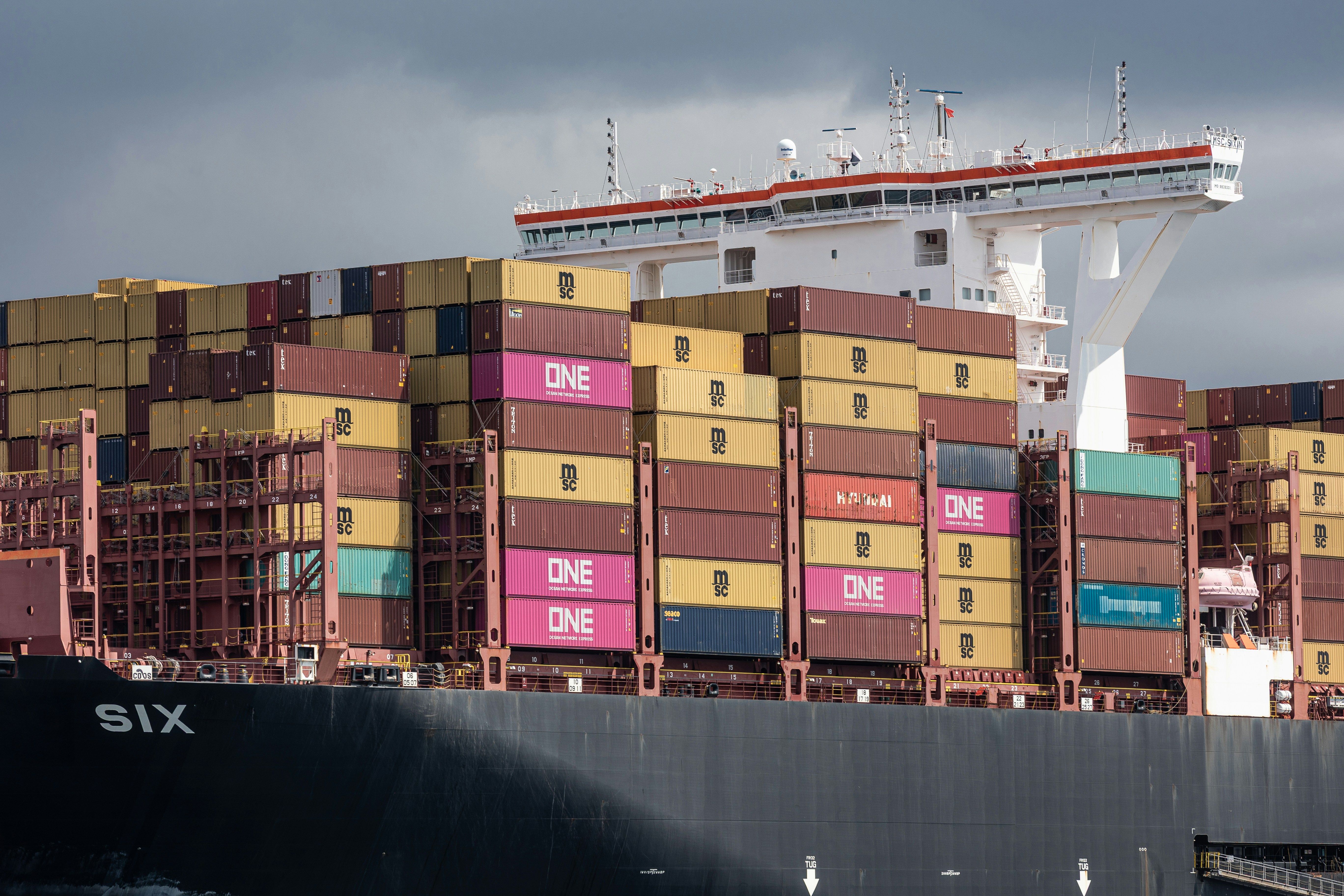
If you’re importing or exporting, you may see “NVOCC” on a quote, a booking confirmation or a bill of lading and wonder what it means.
An NVOCC sells ocean freight transport like a carrier, but doesn’t operate the vessel itself. It’s a great option for businesses that want a simple booking process, order consolidation or competitive rates.
In this article, you’ll learn more about NVOCC and how it benefits importers and exporters like you.
What is an NVOCC?
NVOCC stands for non-vessel-operating common carrier. It’s a shipping carrier that provides ocean transportation and issues its own bill of lading or equivalent shipping documentation, but doesn’t operate the vessels itself.
If a shipping line like Maersk owns and operates the ship, the NVOCC purchases space on that ship and resells it to shippers under its own transport document.
NVOCCs are most common in container shipping, especially where shipments are consolidated, routed through multiple ports or moved as LCL (less than container load).
How do NVOCCs work in practice?
An NVOCC sits between the cargo owner and the shipping line. It typically contracts for space with one or more vessel-operating carriers, then sells that space to importers, exporters or other intermediaries.
Here’s a rundown of how it works:
- You give the NVOCC your shipment details: origin, destination, cargo type, volume, dates and any special handling needs.
- The NVOCC books space with a shipping line for the ocean leg.
- The shipping line issues a master bill of lading to the NVOCC, reflecting the NVOCC as the customer to the carrier.
- The NVOCC issues a house bill of lading to you, reflecting your commercial details and acting as your contract of carriage with the NVOCC.
- The NVOCC coordinates the transport and documentation across the supply chain.
Imagine you’re a UK eCommerce brand importing three pallets per month from Shenzhen to Felixstowe. A shipping line usually prices and operates at the container level, so buying a full 20ft container (FCL) may be a waste.
An NVOCC can consolidate your cargo with other shippers’ freight, book container space with the VOCC, and issue a single house bill of lading for your portion of the load.
NVOCC vs freight forwarder vs shipping line
Most of the confusion around NVOCCs stems from the overlap between day-to-day logistics roles and those of freight forwarders and shipping lines.
Here are the key differences:
NVOCC vs shipping line
A shipping line or VOCC (Vessel Operating Common Carrier) owns and operates the vessel and physically carries the container across the sea. An NVOCC does not operate the vessel, but sells ocean transportation services by booking space with VOCCs and issuing its own house bill of lading.
NVOCC vs freight forwarder
NVOCCs act as carriers, issuing their own bill of lading and assuming liability for ocean cargo. A freight forwarder, on the other hand, acts as an agent organising logistics across multiple modes (air, road, sea). NVOCCs, unlike forwarders, often consolidate small loads (LCL) and have direct, contracted rates with shipping lines.
What are the benefits and drawbacks of using an NVOCC?
NVOCCs can be a great fit, but they are not automatically better than booking directly with a shipping line or using a forwarder. The right choice depends on shipment size, frequency, destinations and the level of support you need.
An NVOCC can make sense if:
- You ship LCL regularly and want consolidation, predictable processes and one consistent document set.
- You value a single point of contact that can book space with multiple shipping lines rather than being tied to one carrier’s sailing schedule.
- You want one “carrier-like” contract supported by a house bill of lading.
Potential downsides of shipping with an NVOCC include:
- A lack of control. NVOCCs do not control the vessel, so ultimate sailing decisions, blank sailings and equipment availability still sit with the VOCC.
- Poor tracking. There may be delays in shipment tracking because you are dealing with third-party information.
- Limited transport options. An NVOCC only handles ocean transportation, unlike a freight forwarder that can arrange air, road and ocean freight.
Find the perfect partner with Pro Carrier
If you need the competitive rates, consolidation and predictability of an NVOCC with the flexibility and control of a freight forwarder, Pro Carrier has you covered. We deliver an NVOCC-style ocean transportation service while helping you arrange onward travel, customs clearance and final-mile delivery.
We work hard to find you the best possible rate with international carriers, work two weeks ahead of schedule to avoid customs delays and let you track everything in near-real-time through Horizon, our all-in-one supply chain platform.
Find out more about our fast, reliable and cost-effective international freight service by reading our case studies or speaking to one of our experts for a custom quote.